
How Many Porta Potties Do I Need Under OSHA Rules?
Start with the crew size, then apply 1926.51(c). Twenty workers or fewer needs 1 toilet facility. Cross into 21 to 199 workers and the ratio shifts to 1 toilet seat plus 1 urinal per 40 people. At 200 workers or more it drops to 1 seat and 1 urinal per 50. That is the construction standard. If your Hayward jobsite runs a general industry operation instead of active construction, the ratio comes from 1910.141(c)(1)(i), not 1926.51. Mixing the two up is the most common mistake we see on permit paperwork. Most crews under 20 workers land on a single standard porta potty rental, and multi-week jobs usually do better on a monthly porta potty rental than paying by the day. Need help translating a headcount into a unit count. Our how many porta potties do I need guide walks through it step by step, and we can quote it directly through request a quote.
Does Cal/OSHA Add Anything Beyond Federal Rules?
Cal osha portable toilet requirements construction sites generally mirror the federal ratios in 1926.51(c), and cal osha portable toilet requirements as a whole track the federal table closely, but site-specific enforcement and inspection timing can differ from federal OSHA visits. Water access matters too: 1926.51(a)(1) requires an adequate supply of potable water at the jobsite, separate from the toilet count itself. Farm and agricultural operations in the Hayward area fall under a different rule entirely. 1928.110 sets field sanitation at one facility per 20 hand-labor employees, and that facility has to sit within a quarter mile walk of the work area. If you are running a farm crew rather than a construction crew, check our farm and agricultural restrooms page instead of applying the construction ratio. Confirming which standard applies before your walkthrough saves a stop-work order later, and it is worth a quick call before delivery day; the same logic holds whether you are asking about portable toilet rental oshawa or storage container rental oshawa for a job outside our usual footprint, since jurisdiction changes the rule set.

What About Handwashing and ADA Access on Site?
Handwashing is often confused with general toilet requirements, so keep them separate. 1926.51(f)(1) only kicks in where workers are applying paints, coatings, herbicides or insecticides, or handling other harmful contaminants. It is not a blanket handwashing mandate for every site. Where it does apply, or where general industry rules govern the site, 29 CFR 1910.141(d)(2) requires soap and towels or a hand-drying device. Hand sanitizer alone does not satisfy that rule. A handwashing station rental or portable sink rental covers both. ADA access is a separate layer on top of OSHA. Standards section 213.2 requires at least 5 percent of clustered single-user units to be accessible, never fewer than one. Section 403.5.1 sets a 36 inch minimum clear route, section 404.2.3 sets a 32 inch minimum door opening, and section 304.3.1 requires a 60 inch turning circle inside the unit. Our ADA accessible porta potty meets those dimensions.
Where Should Units Be Placed on a Hayward Jobsite?
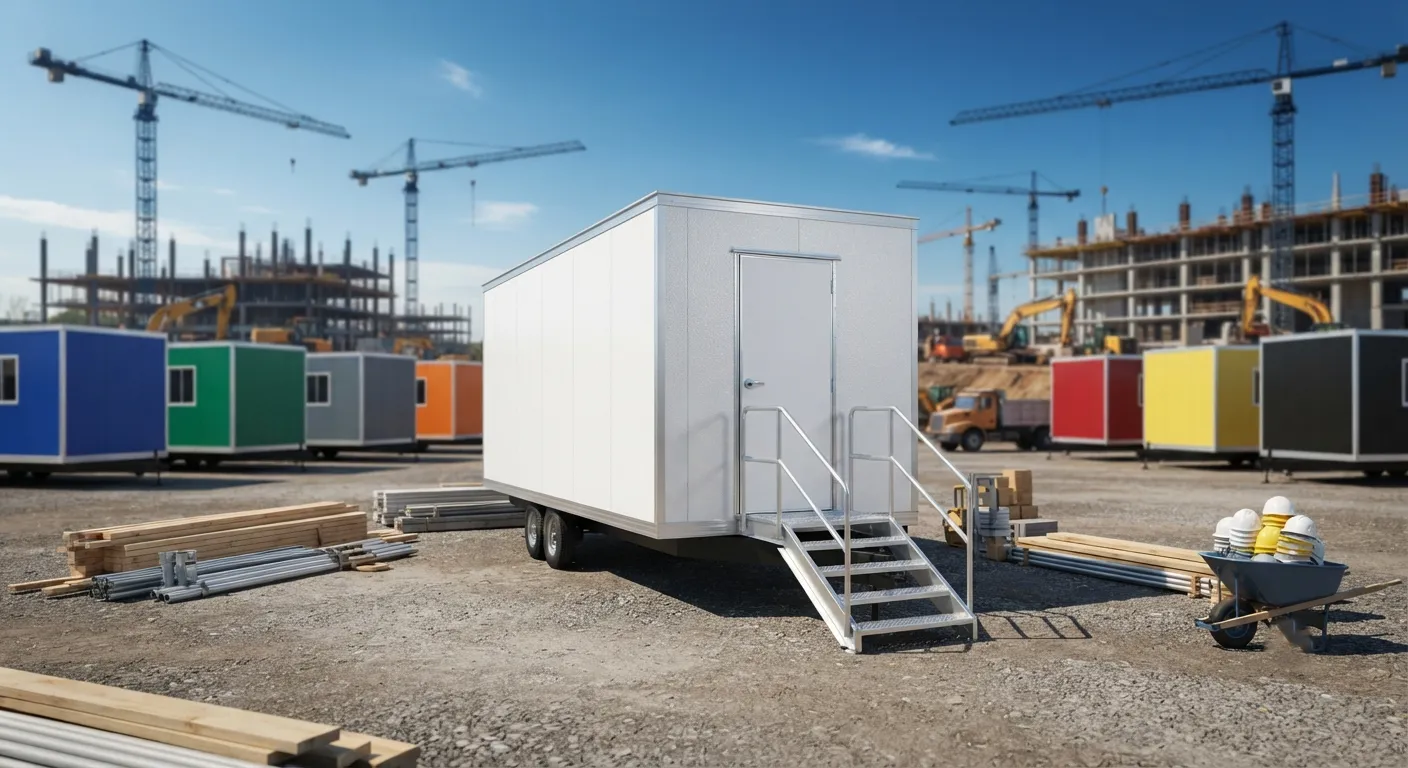
Placement affects both compliance and delivery logistics. ANSI/PSAI Z4.3 sets the baseline service interval at once per week for up to 10 users over a 40 hour week, so unit count and service frequency have to scale together on a busy site. A standard unit runs about 44 by 48 inches on the ground and stands roughly 92 inches tall, with a 60 to 70 gallon holding tank. If you are staging a roll-off dumpster rental or a storage container rental alongside the toilets, remember the truck needs about 60 feet of straight clearance behind it to deliver a roll-off box. Keep that clearance in mind when you plan the layout, whether the job sits in Hayward proper or out toward Cherryland, 5.2 miles north, or Union City, 6.3 miles east. Good lighting matters at night jobs too, under 1926.56(a), and any barricades around the unit cluster should follow 1926.202. Our porta potty placement guide covers clearance and access details specific to jobsite layout.
| unit | day | week | month |
|---|---|---|---|
| standard | $100-$350 | $130-$500 | $125-$325 |
| ada | $200-$400 | $200-$240 | - |
| deluxe | $85-$1200 | $150-$290 | - |
Delivery fees run $100 to $500 for a single day and $120 to $420 for a month, depending on distance and access. See porta potty rental cost and porta potty rental per day for a fuller breakdown, and check dumpster rental cost if you are bundling waste removal with your restroom order.
How many porta potties does a 20 person crew need under OSHA?
One toilet facility covers a crew of 20 or fewer under 1926.51(c). Once you add a 21st worker, the rule shifts to 1 seat and 1 urinal per 40 people. Confirm which threshold your Hayward crew sits at before ordering, since going from 20 to 21 workers changes your unit count.
Is hand sanitizer enough to meet OSHA handwashing rules?
No. 29 CFR 1910.141(d)(2) requires soap and towels or a hand-drying device at handwashing stations; sanitizer alone does not satisfy it. This applies wherever handwashing facilities are required, including sites covered under 1926.51(f)(1) for paint, coating or pesticide work. Order a proper handwashing station rental instead.
Do I need an ADA accessible unit on every jobsite?
Only where units are clustered as single-user facilities; ADA Standards 213.2 requires at least 5 percent of a cluster be accessible, never fewer than one. A single standalone unit on a small job may not trigger it. Check ADA restroom requirements for your specific layout in Hayward.
What is the difference between OSHA construction and general industry toilet rules?
Construction sites follow 1926.51(c); general industry workplaces follow 1910.141(c)(1)(i). Both scale toilet count to headcount, but the breakpoints differ slightly. Agricultural hand-labor crews follow a third standard, 1928.110, requiring one facility per 20 workers within a quarter mile walk.
How far can porta potties be from the work area?
OSHA does not set one universal distance figure for construction across every scenario. 1928.110 does set a quarter-mile walk limit specifically for agricultural field sanitation. For general jobsite placement, see our porta potty placement guide for practical clearance recommendations.
Next step
Get a delivery date
Tell us the address, the dates and the headcount. We size the order and confirm the route.