How Do Porta Potties Work?
The design is simple on purpose. A standard unit sits about 44 by 48 inches on the ground and stands roughly 92 inches tall, so it fits tight jobsite corners without eating space you need for materials. Under the seat sits a holding tank, usually 60 to 70 gallons, pre-charged with a blue deodorizing chemical that breaks down waste and knocks back smell between pump-outs. There's no flush, no water tank, no plumbing to freeze or leak. That's the whole point. For a standard porta potty rental on a busy Hayward job, ANSI/PSAI Z4.3 sets the baseline service interval at once a week for up to 10 users over a 40 hour week, which is why crews with more workers or tighter deadlines add extra units or extra visits rather than stretch one tank. If you're not sure how many you need, run the numbers on how many porta potties do I need before you order.
How Does a Portable Sink Work?
A portable sink runs off a fresh water reservoir, a foot pump or battery pump, and a gray water tank underneath that catches the runoff. No hookup to a building, no drain line. You fill the fresh tank, and the pump pressurizes water to the faucet on demand. Soap goes in a built-in dispenser. This matters because 29 CFR 1910.141(d)(2) requires soap and towels or a hand-drying device at washing stations, not sanitizer alone. That rule shows up constantly around food service and paint crews. If your Hayward crew is applying paints, coatings, herbicides or insecticides, OSHA 1926.51(f)(1) requires washing facilities for that contaminant exposure specifically, and a portable sink rental or handwashing station rental covers it. Check handwashing requirements if you're staffing a site with mixed trades.

How Do Flushable Porta Potties Work?
A flushable unit adds a small fresh water tank and a foot-pump or hand-pump flush that pushes water into the bowl to rinse waste into the holding tank below. It still doesn't connect to sewer. The flush water and holding tank are separate systems, both onboard, both serviced together. That's the difference between a basic unit and a deluxe flushable porta potty: a real flush action instead of a straight drop. Weddings and offices in Hayward tend to request these because they feel closer to a real bathroom. An ADA accessible porta potty uses the same tank and flush principle but with a wider footprint. ADA Standards section 304.3.1 calls for a 60 inch turning circle inside, and ADA Standards section 404.2.3 sets minimum clear door width at 32 inches, so the accessible unit is built bigger from the ground up, not just labeled differently.
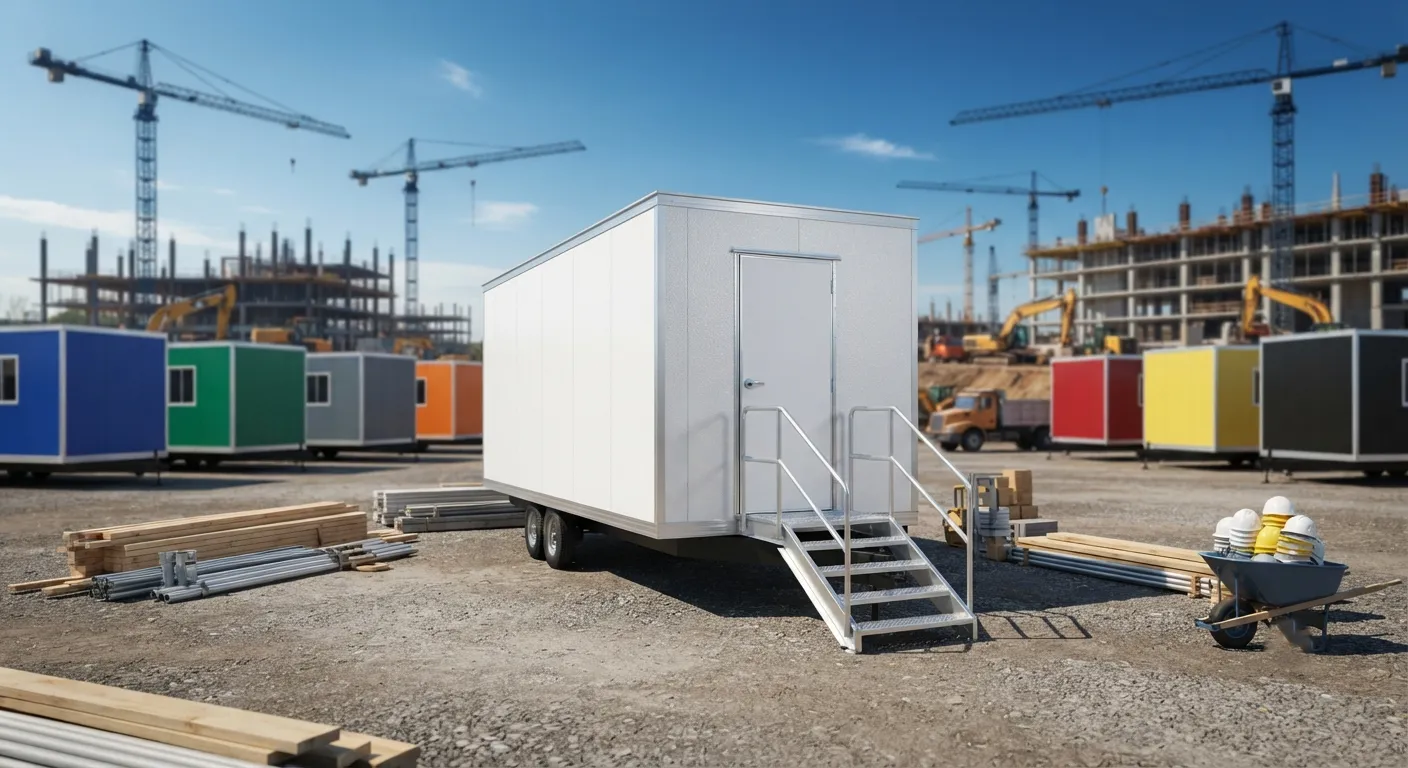
How Do Camping Porta Potties Work?
Camping units work the same way as jobsite ones, just smaller and often self-contained without a delivery truck involved: a small waste tank on the bottom, a flush water tank on top, and a hand pump connecting them. You dump and rinse the tank yourself at a dump station instead of waiting on a service truck. For an actual camping trip or extended outdoor stay, renting a full-size unit from camping porta potty still beats hauling a cassette toilet, especially for groups. On a construction crew, a construction worker running to porta potty mid-shift needs a reachable unit, not a shared one two lots over. OSHA 1926.51(c) sets the ratio: 1 toilet for 20 workers or fewer on a construction site, scaling to 1 toilet seat and 1 urinal per 40 workers once you pass 20. That ratio drives placement and unit count more than any preference.
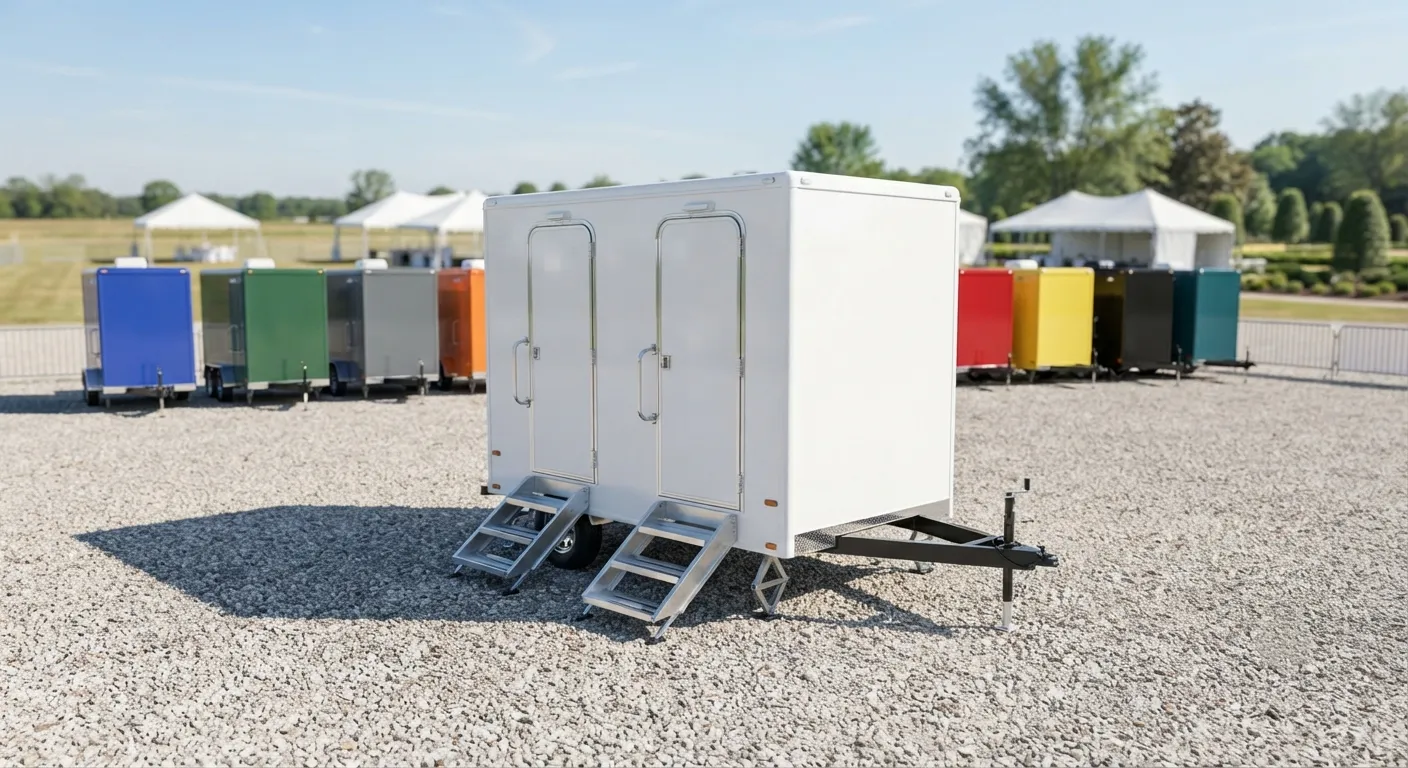
Rental Durations and What They Cost
| Unit | Day | Week | Month |
|---|---|---|---|
| Standard | $100-$350 | $130-$500 | $125-$325 |
| ADA accessible | $200-$400 | $185-$240 | - |
| Deluxe flushable | $85-$1,200 | $150-$290 | - |
Full pricing detail, including delivery fees, lives on porta potty rental cost and porta potty rental per day. For jobs running past a month, monthly porta potty rental locks in a flatter rate than renewing weekly.
Septic tank cleaning chemicals in a porta potty tank aren't the same product as what goes in a home septic tank. The unit's blue chemical is a deodorizer and digester built for a sealed 60 to 70 gallon tank serviced weekly, not a bacterial treatment meant to run for years underground. A house on septic in Hayward gets pumped every 3 to 5 years depending on tank size and household load, which is a completely different maintenance cycle. If your home tank is overdue, septic tank cleaning and how often to pump a septic tank cover that side. Restaurants nearby often need grease trap pumping instead, since a grease interceptor gets pumped once fats, oils, grease and solids hit 25 percent of liquid depth.
Delivery around Hayward reaches Cherryland 5.2 miles north and Union City 6.3 miles east without trouble, and crews further out in San Lorenzo or Ashland fall inside normal routing too. If your event or job site sits outside city limits, check service areas or just call.
Do porta potties smell?
They shouldn't, if serviced on schedule. The blue chemical breaks down waste and suppresses odor between visits, and a stronger smell usually means the tank's overdue for a pump-out. See do porta potties smell for what changes that.
How often are porta potties cleaned?
ANSI/PSAI Z4.3 sets a baseline of once weekly for up to 10 users across a 40 hour week. Busy events or larger crews need more frequent service. Full detail is on how often are porta potties cleaned.
What chemicals go in a porta potty?
A blue deodorizing digester goes in the holding tank at setup, breaking down solids and masking odor. It's not the same product used for home septic tank maintenance. Ask Hayward Porta Pros what's loaded in your unit if you're curious.
Can I get a portable sink without a full restroom trailer?
Yes. A portable sink rental or hand sanitizer station rental stands alone, no restroom needed. Food vendors and paint crews often rent just the sink to meet 29 CFR 1910.141(d)(2).
How many porta potties does OSHA require on a job site?
OSHA 1926.51(c) requires 1 toilet for 20 or fewer workers, then 1 toilet seat and 1 urinal per 40 workers above that. Full breakdown is on OSHA portable toilet requirements.
Next step
Get a delivery date
Tell us the address, the dates and the headcount. We size the order and confirm the route.